 grenke around the globe
Please note that this website shows an excerpt from the grenke AG Annual Report 2025. The annual report, which is also available in the “Reports & Key Figures” section of the grenke AG website, prevails.
Group Sustainability Statement 2025
Entrepreneurial action today takes place in an environment marked by profound economic, social, and environmental change. For grenke, this means not viewing responsibility in isolation but as something that must be firmly connected to its business model, the financing of sustainable investments, and long-term business success. We see sustainability as a foundation for trust, resilience, and long-term value creation across generations.
At grenke, sustainability is not an abstract set of rules but an integral part of corporate responsibility, reflected in both daily operations and the Group’s strategic direction.
Our Group Sustainability Statement 2025 covering this past reporting year shows how grenke continues to evolve its sustainability strategy and supports it through concrete measures.
This report follows the structure of the European Sustainability Reporting Standards (ESRS) and is organised into four thematic areas: General, Environment, Social, and Governance. The content reported in line with ESRS relates to standards E1, E5, S1, S4, and G1.
Alongside the regulatory requirements, each chapter also highlights further initiatives that reflect grenke’s conscious efforts to go beyond the ESRS guidelines. These “supplementary actions” illustrate our view that sustainability is not merely a regulatory obligation but a firm conviction.
A summary of our key ESG indicators can be found here.
ESRS 2 – Principles for preparation
BP-1: General basis for preparation of sustainability statements
This Group Sustainability Statement of grenke AG is a legal requirement in accordance with sections 315b (1) and 315c HGB, as well as the provisions of Article 8 of the EU Regulation 2020/852 (EU Taxonomy) and the associated delegated acts. The Group Sustainability Statement is part of the combined management report for the reporting period from January 1, 2025 to December 31, 2025. The reporting date for all sustainability disclosures mentioned in the report is December 31, 2025.
The legislative process for implementing Directive (EU) 2022/2464 of the European Parliament and of the Council of December 14, 2022 (Corporate Sustainability Reporting Directive, CSRD), was not completed in Germany by December 31, 2025. As a result, the current legal framework for mandatory sustainability reporting introduced by the 2017 CSR-RUG remains in force for the 2025 financial year, and grenke AG is required to prepare a Group Sustainability Statement.
Within this framework, grenke AG, as a reporting company, may draw on European frameworks, among others, when preparing the Group Sustainability Statement. Accordingly, and in alignment with the applicable requirements of Directive (EU) 2022/2464 (Corporate Sustainability Directive – CSRD) still to be transposed into German national law, we apply the European Sustainability Reporting Standards (ESRS Set 1) as defined in Delegated Regulation (EU) 2023/2772. Based on these standards, we disclose our sustainability strategy, governance processes, impacts, risks, and opportunities, as well as key performance indicators and targets for material sustainability topics.
In preparation for the forthcoming mandatory application of the CSRD, we have chosen to undergo a voluntary limited assurance audit of our Group Sustainability Statement by our auditor, BDO AG Wirtschaftsprüfungsgesellschaft. The references to the Group’s websites contained in this Group Sustainability Statement and the information to which these references relate were not subject to this audit. The Annual General Meeting 2025 approved the resolution proposed by the Board of Directors and the Supervisory Board to appoint BDO as the auditor for the sustainability reporting.
Consolidation
Unless otherwise stated, the following information relates to the grenke Group; the non-financial information takes into account the companies included in the IFRS-compliant scope of consolidation. All subsidiaries included in the scope of consolidation are therefore exempt from individual sustainability reporting (2013/34/EU Article 19a (3) and Article 29a (3). The same applies to the EU Taxonomy Disclosures (see EU Taxonomy Disclosures under Article 8 of Regulation (EU) 2020/852).
Methodology
This Group Sustainability Statement outlines the current status of our sustainability strategy, including associated management approaches, governance structures, key measures, and progress achieved during the 2025 financial year across both our upstream and downstream value chain and within our business operations (see Section ESRS 2 – Our sustainability strategy under “Strategy, business model and value chain”, as well as Chapter 1 Group fundamentals under “Business model” in the combined management report.
The Group Sustainability Statement may also include information related to intellectual property or innovation outcomes. This report contains no omissions based on the protection of intellectual property.
BP-2: Disclosures in relation to specific circumstances
In this report, we adhere to the core underlying principles of the European Sustainability Reporting Standards (ESRS): relevance, faithful representation, comparability, verifiability, understandability, materiality, and stakeholder engagement.
Our double materiality assessment focuses in particular on evaluating our sustainability-related impacts, risks, and opportunities (IROs) across the full value chain and over short-, medium-, and long-term time horizons (see Section ESRS 2 – Our sustainability strategy). We define these in our materiality assessment and in our climate targets in accordance with the requirements of the ESRS:
Definition of time horizon:
- Short-term: < 1 year
- Medium-term: 1 – 5 years
- Long-term: > 5 years
As part of our overall routine risk quantification processes, we calculate risk values using a standard 1-year horizon (economic perspective) and a 3-year horizon (normative perspective). For the ESG risk inventory conducted, the timeframes are aligned with the prescribed time horizons: <1 year, 1-3 years, 3-5 years and > 5 years (see Section ESRS E1 – Climate change under “Climate resilience analysis”).
The updated double materiality assessment completed during the reporting year forms the basis for the following selection of five of the ten topic-specific ESRS standards:
- E1 – Climate change
- E5 – Resource use and circular economy
- S1 – Own workforce
- S4 – Consumers and end-users
- G1 – Business conduct
As part of the standard process, a full update of the double materiality assessment is planned for the 2027 financial year (see Section ESRS 2 – Our process for assessing materiality, as well as in the Appendix under the list of specific standard requirements.
As a general principle, we only report quantitative metrics and monetary values when they have been measured and validated. Measurement uncertainties and estimates used in the CO2 accounting are outlined in the following section.
Disclosures related to specific circumstances, sources of estimates, and outcome uncertainty (measurement uncertainty) Corporate Carbon Footprint for our own operations
We report all emissions in rounded metric tonnes of CO2 equivalents (CO2e). Minor rounding differences may result in slight discrepancies, though these are not material.
Scope 1 and 2
During the greenhouse gas data collection, in isolated cases, certain information was not available at the time of reporting. In some instances, we do not receive actual data from utility invoices until the middle or end of the following year. As a result, projections were used in some cases to reliably estimate missing values.
Where no primary data, such as energy bills or landlord disclosures, were available for our corporate carbon footprint (CCF), estimates were made using the previous year’s data. We also used floor space data for our rented offices (in square metres) to ensure a complete and transparent greenhouse gas inventory.
The energy mix was calculated using the data provided in the available invoices. Where estimates are used, such as in cases where landlord or utility bills were not available by the reporting date, they are appropriately accounted for (see Section ESRS E1 – Climate change under “Energy consumption and energy mix”).
Scope 3 in our leasing business
Employee commuting emissions are based on results from the annual employee survey, extrapolated to represent the entire workforce for the reporting year. Emissions from the transportation of returned lease objects by our asset brokers also contain extrapolated data, as actual data were not sufficiently available at the reporting date. Emissions related to waste consumption are largely based on estimates derived from site size, as a complete data basis is not available.
Scope 3 emissions for lease objects
The Scope 3 emissions associated with our leasing operations (Category 2 – Emissions from capital goods and Category 13 – Emissions from downstream leased assets) are calculated using an estimation method. Collecting individual emissions data (primary data) would require a disproportionately high level of effort given the large number of lease objects and their low individual significance. No usable primary data or object-specific activity data relating to our lease objects are available to us on the market.
Our greenhouse gas reporting has been prepared on a consolidated basis. The sites in Chicago and Kieselbronn, as well as the legacy portfolio of Intesa Sanpaolo RFY, are excluded from calculations due to the absence of data in our core system. We continue to develop our measurement methodologies. While we cannot directly influence the emissions resulting from the manufacturing of lease objects by suppliers or from their use by lessees, these emissions are included in our greenhouse gas (GHG) inventory.
To calculate Scope 3 emissions from lease objects during the manufacturing phase, we apply emission factors derived from an input-output model based on the Exiobase database. These factors are specific to sectors and countries and represent emissions per euro of goods produced. Total emissions from the manufacturing phase are calculated by multiplying these emission factors by the object values for each object type. They are reported once in Scope 3, Category 2, in the year of their acquisition or lease contract starting date.
Emission factors for calculating use-phase emissions are also drawn from the Exiobase input-output model and Eurostat capital stock data. Total direct emissions by economic sector and country are allocated to the machinery and equipment included in the capital stock of the respective sector and country. The resulting sector-, country-, and object-specific emissions factors reflect usage-phase emissions of capital stock utilised per euro. By combining the value of lease objects by country and by lessee sector, the total usage-phase emissions of all active lease contracts for the reporting year are calculated using a comprehensive top-down method.
As a result, our corporate carbon footprint is not fully comparable to last year’s figures, and our Scope 3 emissions have increased significantly.
The estimation method for our Scope 3 emissions from lease objects relies on assumptions that can affect the accuracy of the estimates. The most significant assumption is a linear relationship between object value and emissions, which is typical in estimation approaches using emissions factors per euro. Another major assumption is that the objects to which the same emissions factor is applied are homogeneous in terms of the characteristics that affect emissions. Estimation methods based on averages are widely accepted in emissions accounting and considered appropriate. For further details, see Section ESRS E1 – Climate change under “Greenhouse gas emissions in Scope 1, 2 and 3”.
We assess the potential for collecting primary data in order to support our strategic goals and steer our portfolio toward a lower-carbon economy. We also explore options to further enhance the accuracy of our estimation methods by improving the specificity of emission factors.
Recovery metrics
We do not apply estimates or extrapolations to recovery, waste, or recycling data, nor to object returns following the end of lease contracts. We report only quantitative values for which validated measurements are available in our core markets – Germany, France, and Italy. All metrics under ESRS E5 have already been converted to weight-based figures or are still being further developed. Relevant references are provided under ESRS E5 – Circular economy.
Adjustments within the scope of the climate resilience analysis
The following sectors were newly identified as risk-exposed in the reporting year: agriculture, forestry, and fishing, and construction. The “transport/storage” sector was removed. This led to an adjustment in the reported percentage share from 4.29 percent to 9.33 percent for the 2024 reporting year (see Section ESRS E1 – Climate change).
Changes to our non-financial performance indicators (TOP KPIs)
A detailed overview of our TOP KPIs is provided in Chapter 1 Group fundamentals under “Non-financial performance indicators” in the combined management report, and in Section ESRS 2 – Our sustainability strategy.
In the 2025 financial year, we expanded the definition of “green economy objects” to include new object types: battery storage systems, Smart Hub energy storage, eCars, eBuses, and eScooters. These are now included in the calculation of the TOP KPI “Share of green economy objects in the leasing portfolio, measured by net acquisition value (NAV)”.
In the 2025 financial year, for the first time, we are also able to report the gender pay gap for our German entities based on total annual remuneration (see Section ESRS S1 – Own workforce – Remuneration metrics including pay gaps). In 2024, we did not perform any calculations of compensation metrics. In the 2025 financial year, the TOP KPI “Training days” under ESRS S1 was replaced by the newly introduced TOP KPI “Number of contracts per active reseller partner” under ESRS S4. The detailed rationale for this change is provided under ESRS 2 – Our sustainability strategy under “Strategy, business model and value chain”. In the 2025 financial year, we apply an adjusted calculation basis due to a change in the definition in the previous reporting period. For the purposes of this definition, active specialist reseller partners are those who have submitted at least one enquiry to us within the last 365 days. This change leads to deviations in the figures reported compared to the previous year (see Section ESRS E4 – Consumers and end-users).
Corrections to prior-year disclosures
In the 2024 Group Sustainability Statement, we reported the number of ad hoc risk reports as of September 30, 2024, in the Appendix table “Sustainability metrics” on page 177. In this year’s report, we have corrected and updated the figure as of December 31, 2024, and added the new comparative figure for the 2025 reporting year (see the Appendix under “Sustainability metrics”).
Structure of sustainability reporting
As in the previous year, our Group Sustainability Statement 2025 is structured according to ESRS Set 1 and based on our updated double materiality assessment. Any changes compared to previous years concerning calculation methods and target achievements are explained separately within the relevant chapters. In the Appendix, we provide a list of all relevant data requirements under the ESRS E1, E5, S1, S4, and G1 standards.
In terms of the report’s structure, we note that the chapter on EU Taxonomy has been placed at the end of the report. This decision was made to improve readability and not driven by any strategic content-related considerations.
Phase-in
Our use of phase-in provisions for certain data requirements that we do not yet fully meet is described in the index tables for the respective topic standards (see the Appendix under “Phase-in”).
References to other EU legislation: In the appendix to this Group Sustainability Statement (see the Appendix), we include references to other data disclosures required under separate EU regulations in accordance with ESRS 2, Appendix B. These include the Sustainable Finance Disclosure Regulation (SFDR), Pillar 3, Benchmark Regulation and the European Climate Law.
ESRS Disclosure Requirements
In the appendix to this Group Sustainability Statement, we list all of the ESRS standards
(E1, E5, S1, S4 and G1) and their disclosure requirements, together with references to the corresponding chapters.
As a stock corporation under German law, grenke AG has a Board of Directors, Supervisory Board and Annual General Meeting. The Board of Directors is responsible for managing the Company and is monitored and advised by the Supervisory Board. Until August 31, 2025, the Board of Directors comprised the CEO, CSO, and CFO positions (Board composition: 100 percent male). As of September 1, 2025, the Board of Directors once again comprised four members (female: 25 percent; male: 75 percent). The former Chief Risk Officer (CRO) role has been replaced by a Chief Operating Officer (COO) position. This yielded a gender ratio on the Board of Directors of grenke AG of 1:3. The ratio on the Supervisory Board is 1:5. The Supervisory Board comprises six members and does not include any employee representatives.
2025
2025
2024
Target (%)
Result (%)
Result (%)
Supervisory Board
33
17
17
Board of Directors*
25
25
25
* As of December 31, 2024 and December 31, 2025, the Board of Directors consisted of three men and one woman. However, there was a change in the composition of the Board of Directors during the reporting year. One member of the Board of Directors was female on both dates.
Within the Supervisory Board, there are various committees. Their responsibilities and duties are set out in Article 6 of the Supervisory Board’s Rules of Procedure, which also, starting with Article 6, describes the individual committees, their respective roles and their areas of responsibility. Article 12 of the Board of Directors’ Rules of Procedure defines which decisions are taken by individual Board members, which are taken by the full Board, and the circumstances under which the Supervisory Board must be involved in decision-making processes.
Our commitment to sustainability is an integral component of our business strategy. Responsibility for sustainability lies with our CEO Dr Sebastian Hirsch. The involvement of management is ensured through the governance process described in the internal control system for sustainability reporting (see Section ESRS 2 – Our Company policy under “Risk management” and internal controls over sustainability reporting). We continued to develop and update our sustainability strategy in the 2025 financial year. The strategy’s implementation was also accompanied by regular reports to the full Board of Directors in the 2025 financial year. The topics discussed in Board meetings included the approval of results from the double materiality assessment of impacts, risks, and opportunities; the ongoing development and steering of the sustainability strategy; and progress toward the defined targets.
In the 2025 reporting year, the Board of Directors focused on the following ESG topics and received comprehensive briefings and training from the ESG department in this context:
- Further development of the sustainability strategy and implementation measures
- Update of the materiality assessment and disclosure of impacts, risks, and opportunities
- Regulatory changes related to sustainability reporting
- Calculation of Scope 3 emissions for lease objects and carbon footprinting
- New communication formats for knowledge sharing and engagement (Sustainfluencer, Walk the Talk Live, GSI, Sales communications)
Reports and discussions by the Board of Directors on the implementation of the corporate strategy, operational performance, sales, cost structure and profitability, refinancing, liquidity, and the Group’s strategic direction were a regular component of ordinary Supervisory Board meetings. Other key topics included digitalisation, cybersecurity, and the IT strategy, along with updates from the ESG department on carbon footprinting and regulatory developments.
Since 2022, Dr Mitic, as the Sustainability Officer, has been responsible for sustainability within the Supervisory Board. As an expert in sustainable corporate development, she supports and monitors the ESG transformation of the grenke Group (see the information on the competence assessment of Supervisory Board members in the Report of the Supervisory Board).
Audit Committee
The Audit Committee (AC) is responsible for auditing and monitoring the Group Sustainability Statement in accordance with the CSRD requirements.
In preparing the Group Sustainability Statement 2025, the Audit Committee received updates on legislative developments and regulatory changes. The Audit Committee met five times during the year. Its agenda included the status of CSRD/ESG, as well as audit services in the ESG area and the calculations of Scope 3 emissions for lease objects.
Further information on the personnel changes in the Board of Directors and Supervisory Board are contained in Chapter 4 Changes in the Company’s governing bodies in the combined management report, where we explain in detail the number of members of the Board of Directors and Supervisory Board and their competences.
Conflicts of interest, competence and efficiency reviews
The standard operating procedure “Suitability assessment” outlines the selection process for members of the Board of Directors and the Supervisory Board. It also describes the annual review process for conflicts of interest, as well as the competence and efficiency review. The annual assessment is based on a qualification matrix and a suitability assessment questionnaire completed by the Supervisory Board members themselves.
Sustainability is addressed and evaluated under the category “E: Risk Management, Compliance, Internal Audit.”
As part of the 2025 competence and efficiency review conducted in accordance with Section 25d (11) Nos. 3 and 4 of the German Banking Act (KWG), no conflicts of interest were identified among members of the Board of Directors or the Supervisory Board, apart from those already disclosed to the chair of the Supervisory Board (see the Report of the Supervisory Board). All members of the Board of Directors (100 percent) were deemed independent in this year’s conflict of interest review. A committee member is considered independent if they are capable of exercising objective judgement, free from external influence or conflicts of interest.
Corporate development and ESG responsibility
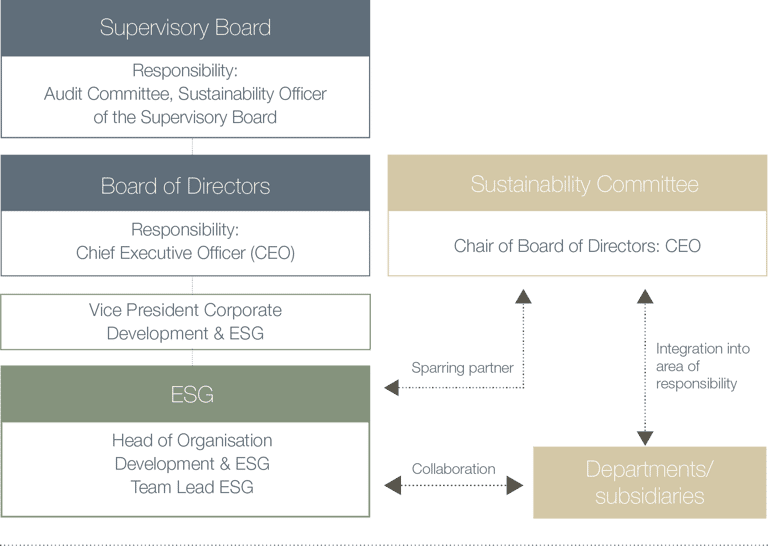
Overall responsibility for sustainability management processes lies with the VP Corporate Development & ESG. This role also bears full responsibility for monitoring and supervising material impacts, risks, and opportunities. The ESG department and relevant management levels are responsible for developing technical content and making decisions on non-fundamental matters. The VP Corporate Development & ESG provides quarterly ESG updates directly to the full Board of Directors and top management (vice presidents) during the quarterly meetings of the Sustainability Committee. These committee meetings include regular updates on sustainability-related risks.
The Supervisory Board is kept informed by the Board of Directors on these topics and developments on both a routine basis and as required.
Sustainability Committee
The Sustainability Committee serves in an advisory and strategic capacity, evaluating material issues identified through the double materiality assessment process. It acts as a catalyst for embedding sustainability topics across the relevant departments. All key and forward-looking decisions are made by the Sustainability Committee, which includes the CEO as chair and the designated Sustainability Officer on the Supervisory Board. The ten-member committee represents functions including ESG and Portfolio Management, Refinancing, Human Resources, Procurement and Workplace, Sales, Risk Management, Accounting and Tax, and Investor Relations.
In the 2025 financial year, the Sustainability Committee focused on the following topics:
- Introduction of a new calculation method for Scope 3 emissions related to lease objects
- Update of the materiality assessment and further refinement of the IROs
- Enhancement of reporting practices and alignment with evolving regulations
- Launch of new communication formats (Sustainfluencer, Walk the Talk Live)
- Continued development and implementation of the sustainability strategy
- Further development of ESG data management processes
- ESG integration into risk management (climate resilience analysis, internal control system for sustainability reporting)
Position of member
Area of competence/expertise
Board area of responsibility
CEO
Corporate strategy, cross-functional
CEO
Sustainability Officer, Member of the Supervisory Board
Member of the Supervisory Board, Sustainability Strategy, AI
AR
VP Corporate Development
Corporate strategy, sustainability strategy, regulatory framework
CEO
VP Investor Relations
Reporting, ESG ratings, investor & ESG communication, capital markets
CFO
VP Human Resources
Social matters, occupational health and safety
COO
VP Corporate Risk
Risk controlling, risk inventory, climate resilience analysis
COO
VP Work Environment
Dealing with suppliers, working environment,
New Work concepts
CEO
VP Sales
Sales structures and measures
CSO
VP Accounting & Tax
Annual financial statements, external accounting
CFO
MD Treasury
Refinancing, access to financial markets, sustainable bond reporting, green and social bonds
CFO
The Board of Directors and top management are actively involved in the preparation of sustainability reporting throughout the governance process. The internal control system and related risk management associated with the sustainability reporting process are described in Section ESRS 2 – Our Company policy.
As part of a benchmarking analysis, grenke evaluates additional risks and opportunities associated with the further development of both its sustainability and corporate strategy by analysing trends and conducting ESG rating gap assessments (see Section ESRS E1 – Climate change under “Climate resilience analysis”).
grenke has implemented sustainability-linked incentive schemes and a sustainability-focused remuneration policy for members of the Board of Directors. In the 2025 financial year, sustainability-related remuneration criteria were also extended to the first level of management (vice presidents) directly below the Board of Directors (see Section ESRS 2 – Our sustainability strategy under “Strategy, business model and value chain” and ESRS G1 – Business conduct).
GOV-3 Section 29a: Key characteristics of incentive systems
The remuneration system for the Board of Directors of grenke AG is designed to support the long-term strategy for sustainable and profitable growth. The Supervisory Board determines the target total remuneration for each Board member for the 2025 financial year. This consists of a fixed base salary, a short-term variable component (short-term incentive, STI), and a long-term variable component (long-term incentive, LTI). The share of the LTI component must always exceed the STI component. Target total remuneration assumes full (100 percent) achievement of all defined objectives.
The STI is awarded annually based on a balanced scorecard (BSC) that includes both financial and non-financial targets. These are assessed using a bonus point system with a maximum of 35 points – up to 20 points for financial targets and up to 15 points for non-financial targets. Each bonus point equates to 1 percent of the annual fixed remuneration of the reference year. The LTI rewards the achievement of long-term goals and must exceed the STI in value.
The Supervisory Board ensures that total remuneration is appropriate relative to duties, performance, and the Company’s financial position, and does not exceed typical market levels without justified cause. To ensure this, the Supervisory Board carried out a review of the appropriateness of the level of remuneration with the support of external and independent advisers.
Supervisory Board members receive fixed remuneration only, with no link to non-financial performance measures (see Section ESRS 2 – Our Company policy under “Integration of sustainability-related performance in incentive schemes”). This structure is intended to safeguard their independence and ensure the proper fulfilment of their oversight and advisory responsibilities.
GOV-3 Article 29b: Performance evaluation based on specific sustainability-related targets and/or impacts
When setting objectives for the Board of Directors in the 2025 financial year, the following non-financial targets were referenced:
- Leadership
- Environmental management and governance
- Internal control system (ICS)
- Individual role-specific targets
The related targets are designed to be ambitious and specific enough to ensure a tangible link between performance and remuneration.
For the “Leadership” category, grenke uses its annual employee satisfaction survey conducted internationally each autumn at the Group level.
The survey covers a broad range of topics including general working conditions, tasks, roles and engagement, development opportunities, stress and workload, pay and benefits, digital capabilities, information and communication, teamwork, cross-functional collaboration, leadership, organisation, change and transformation, strategy, products and innovation, executive management, corporate culture, and overall satisfaction, as well as specific questions on diversity introduced in 2024.
Based on these themes, the Supervisory Board has defined the following four sustainability-related targets for the Board of Directors for the 2025 financial year, with equal weighting and benchmark definitions (see Section ESRS 2 – Our Company policy under “Integration of sustainability-related performance in incentive schemes”).
Category
Leadership: Result of the
annual international employee satisfaction survey
Points
distribution
Previous year’s value
(2024)
Explanation of
targets
Benchmark
Topic: Development opportunities
1.0
2.8
Maintain level/slight improvement
3.2
Topic: Stress and workload
1.0
3.3
Maintain level/slight improvement
3.2
Topic: Team collaboration
1.0
2.2
Maintain level/slight improvement
2.5
Topic: Change and transformation
1.0
3.8
Progress towards the benchmark
3.4
Total per Board member:
4.0
Strategic relevance
As decision-makers who act for the benefit of the company, the members of the Board of Directors are expected to successfully involve the organisation and its people in the implementation of the strategic objectives. How successful they are at achieving this is assessed and reviewed through the annual international employee satisfaction survey.
For the categories “Environmental management and governance” and “Internal control system (ICS),” targets for 2025 were set by the Supervisory Board at the start of the financial year. The following summary outlines the applicable targets for 2025, their respective weighting, and their link to the Company’s overarching strategy:
Balanced Scorecard (BSC) – Non-financial targets (Group-level), target values, and alignment with corporate strategy in the 2025 financial year
Overarching
qualitative targets
Points
distribution
Targets
Strategic relevance
Environmental management and
governance
(ESG)
1.0
-
Appropriate further evolution of ESG strategy
Progress in developing the grenke Sustainability Index (GSI) and
its application when engaging with customers and partners
Companies are also assessed on the contributions they make to society and sustainability in consideration of future generations, the conservation of resources, the prudent and equitable handling of money, and a peaceful coexistence.
At the same time, sustainable and prudent conduct is part of our DNA as a listed family company and the basis for a lasting increase in enterprise value.
Internal control system (ICS)
4.0
Strengthening governance by drawing conclusions from current findings across all Board of Directors departments
This target supports the Group’s strategic focus on effective and sustainable governance. By consistently addressing all identified areas requiring action, the effectiveness of the internal control system is enhanced and a consistently high level of control and quality is ensured across the Group. This also makes a significant contribution to responsible corporate governance and the long-term quality of governance and compliance.
Total non-financial objectives
per Board member:
5.0
At the beginning of each financial year (and in the case of mid-year appointments), specific individual targets are defined for each Board member in the “Role-specific individual targets” category. Targets are aligned according to the corresponding area of responsibility and the contribution made to the corporate strategy. These targets may include the following:
- Business development and strategically relevant departmental initiatives
- Optimisation and efficiency measures
- Enhancement of digital competence
- Succession planning
- Implementation of compliance and governance standards
- Leading by example and promoting grenke AG’s cultural framework
At year-end, the actual achievement rate (0 percent to 100 percent) for each metric is calculated and multiplied by its predefined score. The result contributes as a partial component to the total target achievement of the Balanced Scorecard (BSC).
GOV-3 Article 29d: Proportion of variable remuneration for administrative, management, and supervisory bodies linked to sustainability-related objectives and/or impacts
Part of the variable remuneration is defined as a percentage of the fixed salary, while another part is specified as a fixed amount. As a result,
a definitive percentage for the total variable remuneration cannot be provided.
Of the portion tied to fixed remuneration, 20 percent relates to non-financial performance indicators.
GOV-3 Article 29e: Responsible level for approving and updating the terms of incentive schemes for administrative, management, and supervisory bodies
The Remuneration Control Committee of grenke AG prepares the target objectives and performance metrics. The Supervisory Board approves and updates these objectives at the beginning of each financial year.
Supplementary disclosures under E1 Article 13: Consideration of climate-related factors in remuneration of administrative, management, and supervisory bodies
No climate-related targets were established for the remuneration of the Board of Directors or the Supervisory Board of grenke AG in the 2025 financial year.
ESRS 2 – GOV-4 AR 10.
Core elements of due diligence
Chapter
a
Embedding due diligence in governance, strategy and business model
GOV-2 – Information provided to governance bodies; GOV-5 – Risk management and internal controls for sustainability reporting; Annual Report, Chapter 8 Corporate Governance Statement in the combined management report
b
Engaging with affected stakeholders in all key steps of the due diligence
SBM-2 – Interests and views of our stakeholders
c
Identifying and assessing adverse impacts
SBM-3 – Material impacts, risks and opportunities and their interaction with strategy and business model;
IRO-1 – Description of the process for identifying and assessing material impacts, risks and opportunities
d
Taking actions to address those adverse impacts
SBM-3 – Material impacts, risks and opportunities and their interaction with strategy and business model;
E1-3 – Our measures and resources in relation to climate strategies; E5-2 – Our measures and resources in relation to the circular economy; S1-4 – Measures to mitigate material risks and take advantage of opportunities in relation to our own workforce; S4-4 – Our measures to manage material impacts, risks and opportunities and the assessment of their effectiveness
e
Tracking the effectiveness of these efforts and communicating
GOV-5 – Risk management and internal controls for sustainability reporting, IRO-1 – Description of the process for identifying and evaluating material impacts, risks and opportunities
Policies and frameworks
We base our sustainability strategy and activities on internationally recognised frameworks and standards as well as on policies we have implemented ourselves and integrate these into our business activities. The following lists some of the most important guidelines and principles:
UN Sustainable Development Goals
We take responsibility for sustainable development across all of our business activities and have integrated the United Nations Sustainable Development Goals (SDGs) into our sustainability strategy (see Section ESRS 2 – Our sustainability strategy).
Diversity Charter
Equal opportunity and diversity are fundamental components of our corporate culture. In the 2022 financial year, we signed the Diversity Charter (Charta der Vielfalt) and are actively committed to further anchoring the concept of diversity in our organisational structure. We are also committed to a corporate culture characterised by mutual respect and appreciation and align our HR processes to appropriately honour the diverse skills of our employees. We recognise diversity within and outside our company and use the associated potential to further develop our company.
Measures in support of responsible due diligence processes:
German Corporate Governance Code
With the publication of its Declaration of Conformity on January 30, 2026, grenke AG fully complies with the essential legal requirements for the management and supervision of listed companies as outlined in the German Corporate Governance Code (GCGC) and largely adheres to the GCGC’s recommended standards for sound and responsible corporate governance (see Chapter 8 Corporate Governance Statement/Report on Corporate Governance in the combined management report). The DVFA e. V. scorecard has been firmly established since 2016 as a qualitative benchmark for evaluating the governance structures of listed companies. It covers DAX, MDAX, and selected SDAX stocks. In 2025, grenke secured a top position in the DVFA Scorecard for Corporate Governance for the fourth consecutive year. With 85.88 percent of the points (2024: 83.14 percent), the strong result from the previous year was exceeded, once again earning a "very good" rating. As one of the few SDAX-listed companies assessed, this score places grenke on par with leading companies in the MDAX and DAX indices.
grenke Code of Conduct
We have established the foundation for our compliance and grenke-compliant behaviour in our Code of Conduct. The Code is available to download from our website. It serves as a binding guideline for our values and our behaviour. It is mandatory that all people working at grenke comply with the Code. This includes the Board of Directors, the Supervisory Board, the management of our subsidiaries, managers and each employee. To offer this broad target group clear and simple instructions for action, the Code of Conduct summarises the rules and regulations important for our Group in an easy-to-follow manner. With the public availability of our Code of Conduct, we also reaffirm to the outside world that we conduct our business activities in accordance with the relevant national legal standards, key international legal standards, conventions and declarations (such as the International Bill of Human Rights), the core labour standards of the International Labour Organization (ILO) and the UN Guiding Principles on Business and Human Rights (UN Global Compact), as well as in accordance with solid ethical values and principles such as integrity, credibility and reliability. In some of the chapters that follow, we also address the application of the grenke Code of Conduct in the various work and subject areas (see sections ESRS S1 – Own workforce; ESRS – S4 Consumers and end-users; and ESRS G1 – Business conduct).
grenke Supplier Code of Conduct
We believe transparency and trust are the basis for successful cooperation. We also expect our suppliers to comply with our Code of Conduct by implementing similar standards for themselves, their suppliers and subcontractors. Our Supplier Code of Conduct requires suppliers to adhere to labour rights, human rights, and environmental protection laws (see sections ESRS S4 – Consumers and end-users and ESRS G1 – Business conduct). Our Supplier Code of Conduct is available to download from our website.
Environmental Policy
The Environmental Policy summarises our efforts in environmental protection. We are committed to continuously improving our environmental management system in line with regulatory and compliance obligations. This includes ensuring that we fulfil the requirements of environmental law and customary market standards. It is also a guideline for the implementation of measures and strategic fields of action to minimise our own corporate footprint and to support small and medium-sized enterprises (SMEs) in making sustainable investments. We discuss these measures in detail in the following chapters. This policy is available to download on our website.
Travel and Car policies
Our employees’ selection and use of different means of transportation (car, train, airplane) and the associated reduction in CO2 emissions are covered in both our Travel Policy and Car Policy. These policies support our CO2 emission reduction targets outlined in our Climate Action Plan. We also highlight the related measures separately in the relevant sections of this Group Sustainability Statement (see Section ESRS E1 – Climate change).
Health and Safety Policy
The aim of this guideline, which applies to all grenke companies in Germany, is to maintain, improve and promote the health and safety of our employees through efficient and systematic occupational health and safety. This is further supplemented by company health-support measures (see Occupational Health and Safety Policy – OHS Policy). This policy is available to download from our website.
Our guidelines for responsible financial products
We are committed to providing financial products and services that are sustainably aligned with customer value. These guidelines set out grenke’s commitment to responsible financial solutions and sustainable business practices. They emphasise core principles such as compliance with laws, ethical conduct, confidentiality, transparency, and fair service. grenke supports the green transformation and digitalisation of SMEs through financing solutions and the proprietary grenke Sustainability Index (GSI). A rigorous acceptance process, comprehensive customer support, and continuous improvement of products and processes complete this commitment, ensuring we meet the evolving needs of customers and partners. In addition, the following paragraphs were added in the 2025 financial year: Transparency about product risks, responsible marketing and communication, a sustainable service promise, social financial services, the development and promotion of sustainable and innovative products and services, oversight of responsible sales practices, prevention of payment defaults, independent grievance and ombudsman offices, and the promotion of the circular economy.
Enterprise portfolio management
Company-wide project portfolio management controls the recording, monitoring and prioritisation of projects within the Company. When recording new projects, we also analyse their relevance to our material sustainability topics.
The financial sector plays a pivotal role in delivering the European sustainability objectives. Financial institutions are obliged to support the financing of the sustainability transformation. As part of this transformation, financial institutions may also be exposed to physical and transitory risks that need to be identified, assessed and managed. The risk management requirements for grenke largely arise from the “Information sheet on dealing with sustainability risks” dated December 20, 2019 (amended on January 13, 2020) and from the Minimum Requirements for Risk Management (MaRisk).
We describe the integration of ESG risks into our risk management in the risk report contained in this annual report (see Chapter 5 Risk report in the combined management report). We outline the main components of our internal control system in Chapter 5 Risk report in the combined management report, under sub-chapter 5.3.5 concerning the Group financial reporting process and 5.3.6 concerning the Group as a whole.
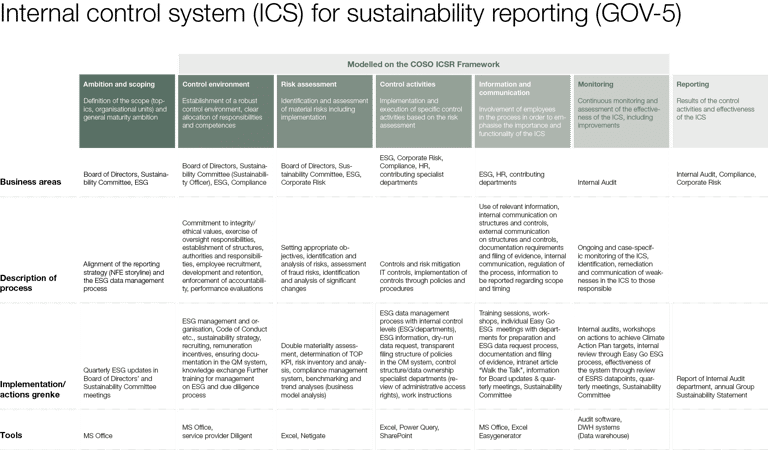
grenke AG’s internal control system (ICS) for sustainability reporting is based on the Committee of Sponsoring Organizations of the Treadway Commission Internal Control Over Sustainability Reporting Framework (COSO ICSR Framework) and is designed to ensure the integrity and reliability of the sustainability disclosures (see the table “Internal control system for sustainability reporting”).
The system spans all phases of the reporting process – from risk assessment and control activities to monitoring – and is embedded in the Company’s broader processes. A peer analysis confirms that such a system reflects industry standards. Its core elements include a strong control environment, clearly defined responsibilities, documented control activities (e.g. the four-eyes principle), and ongoing improvements through our Internal Audit department and external assurance. The ICS is subject to regular review and adjustment to meet evolving requirements and ensure transparent, traceable reporting. The results of this review are reported to the Board of Directors and the Supervisory Board as part of Internal Audit’s report.
In the 2025 reporting year, 21 departments were involved. The ESG team coordinates the submission of qualitative and quantitative content, which is then consolidated in the final sustainability report of grenke AG. Responsibility for the accuracy and completeness of the data rests with the respective specialist departments. The responsible staff from each department involved in the data entry process input the relevant data into a file provided by the ESG team, applying the four-eyes principle.
At the same time, the ESG team ensures and monitors the timely and accurate delivery of content and compliance with the CSRD requirements. This is achieved through ongoing support of the departments involved, as well as training and information sessions on the disclosure requirements and the data entry process. This continuous exchange ensures effective collaboration. The internal control system is regularly reviewed and adapted to evolving requirements to ensure transparent and traceable reporting. Clearly defined processes and responsibilities, together with ongoing documentation of procedures, safeguard the integrity of our sustainability data.
Based on the contents and objectives of the corporate strategy, the risks relevant to the grenke Group are identified annually as part of the risk inventory and assessed for materiality. This yields the Group’s overall risk profile, providing the Board of Directors with a comprehensive overview of relevant risks. A particular focus is placed on the systematic identification and assessment of the impacts of ESG risks. Using the materiality assessment, we identify the key focus areas of our sustainability strategy and, consequently, of the sustainability report. We review and update our materiality assessment on an annual basis (see grenke Annual Report 2024).
Risks associated with the preparation of the sustainability report
The preparation of this report entails certain risks, which we seek to mitigate through a range of strategies. One such risk is the potential misinterpretation of legal requirements, which could result in compliance violations. To mitigate this, we rely on officially available guidance, such as that provided by EFRAG, as well as a transparent documentation system (e.g. structured recordkeeping).
Timely publication of the report is another area of risk. To manage this, the ESG team closely monitors the punctual delivery of required information and maintains regular communication with the relevant departments.
Another key risk involves incomplete or inaccurate disclosures that could present a misleading view of actual conditions. To reduce this risk, clear responsibilities for data submission have been assigned. Additionally, training sessions and informational events are held to ensure an understanding of the disclosure requirements and data entry process, which we refer to internally as our “Easy Go ESG” format. The continuous dialogue on our material sustainability topics ensures the availability of the required ESG data. The application of the four-eyes principle during data verification also contributes to risk mitigation. In 2024, we voluntarily engaged in an external audit to evaluate our approach and data management processes, gaining valuable insights to ensure compliance with regulatory requirements.
In 2025, we further developed and enhanced our procedures for risk management and internal control in the context of sustainability reporting, with a focus on integrating risk assessment outcomes and internal controls into the relevant internal functions and processes. The findings from our risk assessment and internal control activities are systematically embedded into our sustainability reporting processes and structures. This also includes the integration of the ESG risk inventory into our materiality assessment. A significant development in 2025 was the launch of our proprietary IRO dashboard – a company-specific tool that visualises the outcomes of the double materiality assessment. It captures the ESG risks, opportunities, and impacts (impacts, risks and opportunities – IRO) identified for grenke. With regard to sustainability reporting, the dashboard supports both data entry in line with ESRS requirements and the identification of targeted actions and control functions addressing our impacts, risks, and opportunities.
Our Board of Directors is updated quarterly by the ESG team on the reporting status during a Board meeting. The reporting obligations of the Board of Directors to the Supervisory Board are set out in the Board of Directors’ Rules of Procedure. The risk strategy is reviewed annually, adopted by the Board of Directors, and then submitted to the Supervisory Board. The ICS is subject to regular review and adjustment to meet evolving requirements and ensure transparent, traceable reporting. The results of this review are reported to the Board of Directors and the Supervisory Board as part of Internal Audit’s report. We describe the integration of ESG risks into our risk management approach in the risk report contained in this annual report (see Chapter 5 Risk report in the combined management report). The Risk Control team provides monthly updates to the Board of Directors via regular risk reporting. The risk strategy is reviewed annually, adopted by the Board of Directors, and then submitted to the Supervisory Board.
Our sustainability strategy is structured around three dimensions of action – climate and environment, social contribution, and responsibility and trust. Each is supported by clear targets, TOP KPIs, and specific measures (including ESG financial products, attractive employer and customer experience, and robust risk management). The double materiality assessment (inside-out and outside-in perspectives) defines the key action areas. Based on this, grenke has identified nine TOP KPIs to track progress over the short, medium, and long term. The entire value chain – from product development and partner acquisition to the return and reuse of lease objects – is consistently embedded in our sustainability targets. With our new ESG dashboard and adapted KPIs, our management approach has become more transparent and targeted.
Since our founding, sustainability has been a core part of our corporate identity and a key driver of our success. Our innovative financing solutions help customers—especially SMEs—invest in modern, resource-efficient technologies, while also ensuring that lease objects are reused or recovered as effectively as possible once contracts end. We have already embedded sustainability in our corporate strategy. Derived from this, our sustainability strategy describes our sustainability vision: An enabler for sustainable SMEs.
Our sustainability strategy and vision provide the framework for our targets and actions across three key dimensions:
- Climate and Environment
- Social Contribution
- Responsibility and Trust
We have established a strategic ambition and defined clear priorities for each of these dimensions. This is based on our double materiality assessment, from which we derive key areas for action (see Section ESRS 2 – Our sustainability strategy).
Enabler for sustainable SMEs
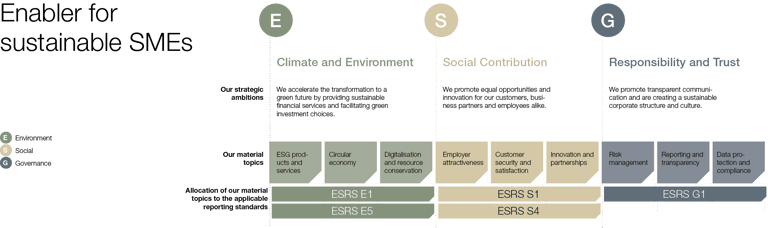
The United Nations Sustainable Development Goals (SDGs) also serve as a guiding framework, with nine goals identified as particularly relevant to our business.
Climate and Environment
Our ambition in the climate and environment dimension is to accelerate the transition to a green economy by offering sustainable financial services and making it easier for SMEs to make environmentally conscious investment decisions. This ambition encompasses our strategic focus topics, particularly within the climate and environment dimension.
- ESG products and services:
This topic describes our ability to enable SMEs to invest in their sustainability and to offer sustainable (lease) financing and services ourselves (see Section ESRS E1 – Climate change). - Circular economy:
This topic deals specifically with the reuse and recycling of lease objects at the end of their contract term to support a circular economy (see Section ESRS E5 – Circular economy). - Digitalisation and resource conservation:
This topic describes our ability to digitalise processes and workflows, thereby minimising the use of resources. Further measures are outlined in ESRS E1 – Climate change.
Social Contribution
Our contribution to society lies in promoting equal opportunities and innovation for our customers, business partners, and employees alike. These topics are at the heart of our strategic focus within the “Social contribution” dimension.
- Employer attractiveness:
This topic outlines how we attract, develop, and retain qualified employees over the long term through targeted development and retention initiatives. - Customer security and satisfaction:
Customer satisfaction and safety involve creating positive and meaningful customer experiences and ensuring high satisfaction by offering SMEs attractive and equitable access to financing. - Innovation and partnerships:
This topic describes the development and maintenance of strategic partnerships as part of our commitment to fostering a sustainable society and driving innovative solutions.
Responsibility and Trust
We have summarised our striving for a sustainable corporate structure and transparent, reliable and trustworthy corporate governance under responsibility and trust. Our strategic focus topics in the responsibility and trust dimension can be summarised as follows:
- Risk management:
This addresses our ability to assess, manage, and minimise risks that could potentially impact the Company’s position and development (see sections ESRS G1 – Business conduct and ESRS 2 – Our Company policy under “Risk management and internal control system for sustainability reporting”). - Reporting and transparency:
The focus of this topic is on promoting transparency in corporate communications as well as in financial reporting and the Group Sustainability Statement (see Section ESRS G1 – Business conduct). - Compliance and data protection:
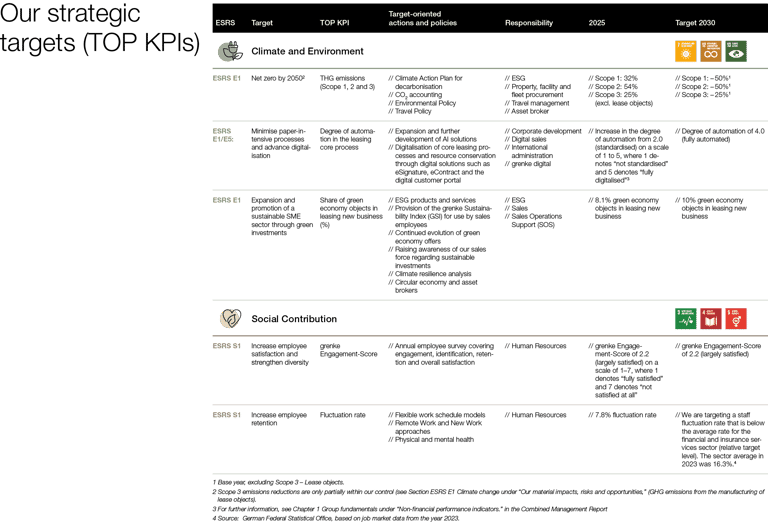
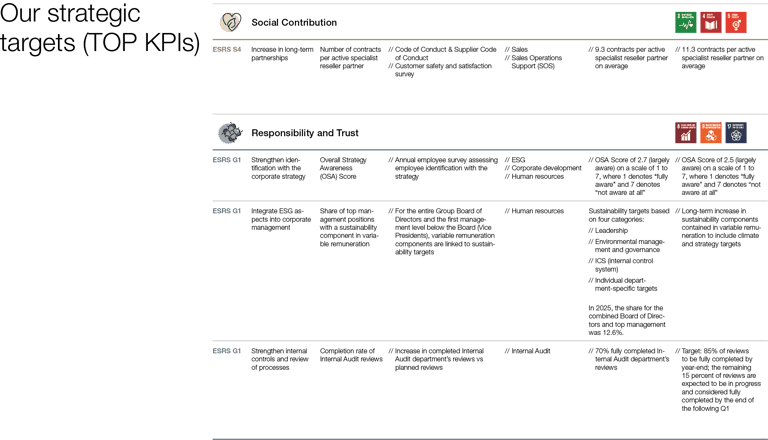
This topic covers the protection of data by the grenke Group and compliance with applicable laws and regulatory requirements (see Section ESRS G1 – Business conduct). To track our progress, we use nine TOP KPIs – three for each dimension. These allow us to monitor the achievement of our short-, medium- and long-term goals in a targeted manner (see the diagram “Strategic objectives TOP KPI”).
Our strategic targets (TOP KPIs)
Value chain
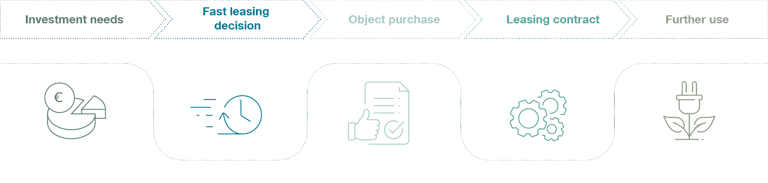
As we continue to develop our sustainability strategy, we make sure to include the entire value chain and all countries in which we operate. The grenke value chain includes all activities from refinancing and establishing relationships with our specialist reseller partners to the entire core leasing process, as well as activities aimed at transitioning lease objects into a second lifecycle. Our value chain (see the diagram “Value chain”) encompasses both upstream activities (1. Market research and product development; 2. Acquisition and support of specialist reseller partners (SRPs); 3. Acquisition of customers; 10. External financing and liquidity management) and downstream activities (7. Return of objects/recycling; 8. Continued use of objects – second lifecycle). Further details on our business model, operating activities and segments, as well as the ownership structure of grenke AG, are provided in Chapter 1 Group fundamentals in the combined management report. Information on the cost structure and revenues of the business segments, in accordance with IFRS 8 disclosure requirements, is provided in Chapter 2 Economic report in the combined management report.
As part of this year’s update to our sustainability strategy, we revised one of our nine TOP KPIs. The newly defined KPI puts a stronger focus on our customers and partners and falls under the “Social contribution” dimension: Number of contracts per active specialist reseller partner. There have been no material changes to the remaining TOP KPIs compared to the previous year. However, to refine our management approach, we have now clearly defined the objectives according to short-, medium-, and long-term time horizons.
A TOP KPI for the circular economy is expected to be introduced once data quality and availability are sufficient and the relevant processes have reached an appropriate level of maturity.
To support the identification of suitable measures and improve progress tracking, we also enhanced our internal processes this year and introduced an ESG dashboard. This tool helps departments translate findings from the materiality assessment into concrete actions and systematically monitor progress towards our TOP KPIs.
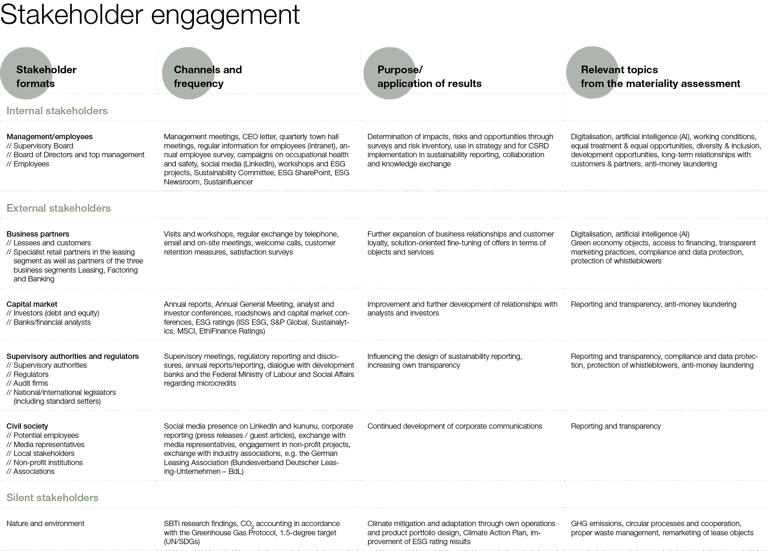
We maintain ongoing dialogue with our stakeholders, which includes capital market participants, investors, the scientific community, public authorities and associations, as well as our employees, customers, and partners. We also view nature as a “silent stakeholder.” Feedback from these groups actively contributes to shaping our strategic decisions. We communicate through a range of tailored formats and channels specific to each audience. The table below outlines the communication methods used for each stakeholder group.
As part of the quarterly report to the Board of Directors, the Board is informed of the results of the dialogues and perspectives of our internal and external stakeholders. The results are subsequently incorporated into the further development of the corporate strategy.
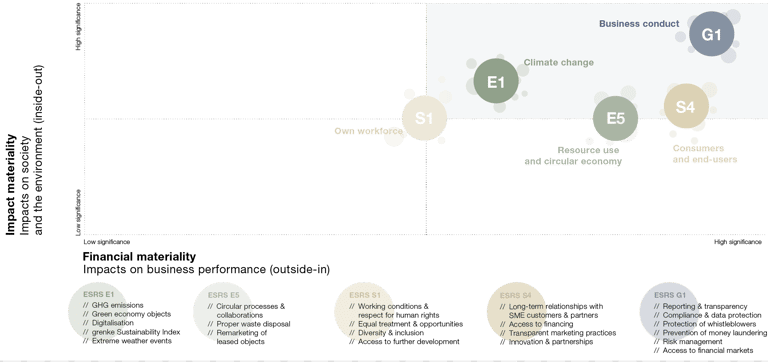
We organise our materiality assessment in accordance with the requirements of the double materiality principle in accordance with the European CSRD Directive and its ESRS reporting standards, as well as national legislation in accordance with Section 289c (3) HGB. We consider sustainability issues from both an inside-out and an outside-in perspective. The inside-out perspective describes grenke’s impact on society and the environment, while the outside-in perspective looks at the impact of non-financial topics on the business performance, business results and position of the grenke Group (see the diagram “Materiality matrix”). Our materiality assessment and the associated materiality matrix from 2022 form the basis for the material focus topics of our sustainability strategy (see Section ESRS 2 – Our sustainability strategy) and therefore also for this Group Sustainability Statement. We update and review our materiality assessment annually. The process is relaunched at least every five years on the basis of a comprehensive survey of internal and external stakeholders. As part of the 2025 update, we broadened our stakeholder survey to evaluate impacts, risks, and opportunities (IRO) from a variety of perspectives, allowing for a more comprehensive assessment. This led to a more detailed analysis of the topics and IROs in 2025.
Our CEO is responsible for the Group’s sustainability strategy and is regularly briefed on stakeholder perspectives within the scope of our materiality assessment. The ESG team is responsible for the ongoing development and implementation of the sustainability strategy and provides quarterly updates to the Board of Directors and the Sustainability Committee on progress, planned actions, and key decision-making elements related to the materiality assessment.
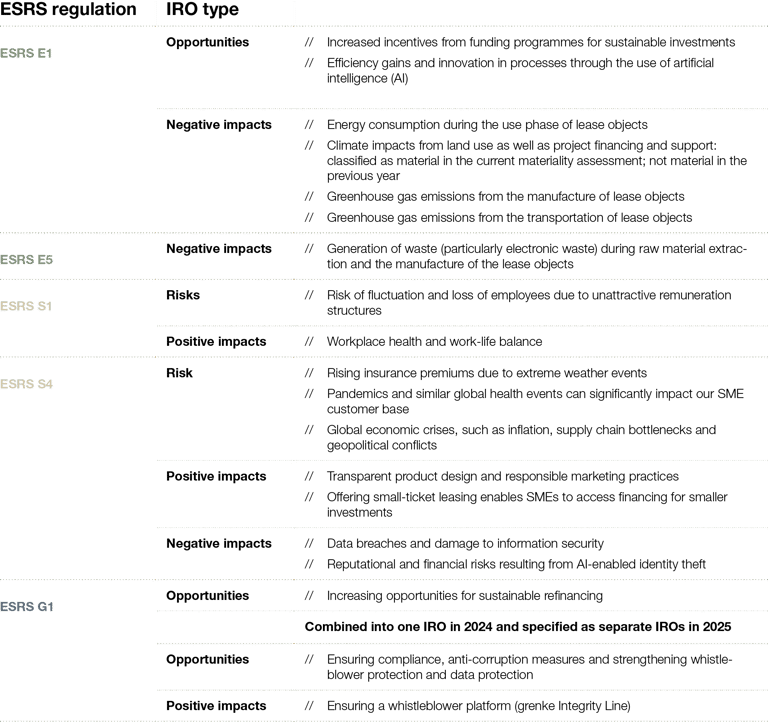
The impacts, risks and opportunities identified through the materiality assessment are detailed within each of the corresponding ESRS topics (see E1, E5, S1, S4 and G1). We also outline which parts of the value chain are affected by these specific impacts, risks and opportunities. When possible, we reference our company-specific products and services, including our social and green bonds, green economy objects, the grenke Sustainability Index (GSI), small-ticket leasing, and our asset broker companies.
In addition, we distinguish between short-, medium-, and long-term time horizons, based on the following definition:
- Short-term (< 1 year): Does the IRO have a short-term impact?
- Medium-term (1 to 5 years): Does the IRO have a medium-term impact?
- Long-term (> 5 years): Does the IRO have a long-term or cumulative impact?
Compared to the previous year, several IROs were refined or expanded to reflect developments in key areas such as artificial intelligence (AI) and Scope 3 lease objects. The following IROs were among those affected:
Impact of the Company’s material risks and opportunities on its financial position
As part of our double materiality assessment, we have identified material ESG-related risks and opportunities across the entire value chain. The current financial and earnings situation related to these factors is outlined in ESRS E1 – Climate change under “Climate resilience analysis”. Our ESG risk inventory indicates that both physical and transitional risks are likely to have an increasing influence on credit risk in the future, primarily through indirect impacts on our customers. We do not anticipate any significant risk of material adjustments to carrying amounts within the next 12 months. We see the most promising opportunities in (1) expanding leasable, low-emission products (green economy objects), (2) government-sponsored funding schemes that are likely to boost demand for grenke’s financing solutions, and (3) AI technologies that offer potential for increased efficiency and cost savings (see Section ESRS E1 – Climate change). A quantification of these potential financial effects was not carried out during the reporting year.
The process for identifying our material impacts, risks and opportunities (IRO) in 2025 comprised five key steps:
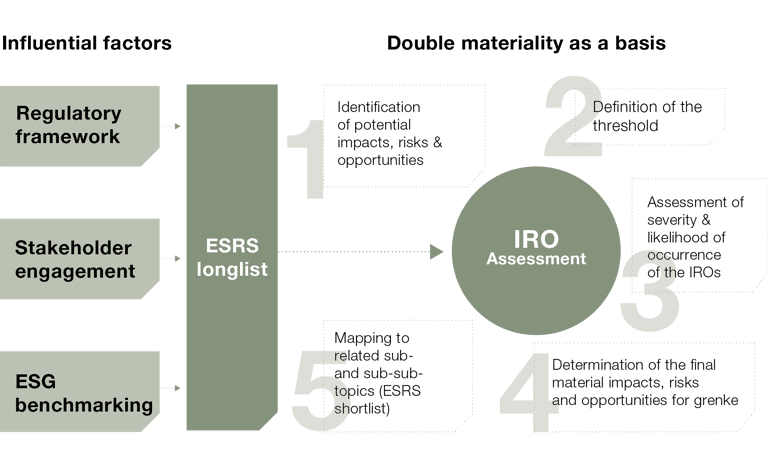
1. Preparation of a long-to-medium list:
Based on the ESRS long list, the ESG team and experts from the various departments within the Sustainability Committee selected the topics deemed relevant to grenke and its business model. The list of sustainability topics and corresponding sub-topics, as outlined in ESRS 1 AR 16 served as the initial reference point for identifying potential impacts, risks, and opportunities.
2. Identification of potential impacts, risks and opportunities:
Along grenke’s entire value chain, we identified potential short‑, medium‑, and long‑term impacts, risks, and opportunities based on our strategic analyses and the sustainability aspects outlined in ESRS 1 AR 16. Impacts can be negative or positive and can include actual or potential impacts. In the 2025 financial year, several IROs were refined to reflect topics whose relevance has increased, as well as newly emerging and further developed issues. To compile the list of IROs for the materiality survey, we held additional discussions with the Sales, Circular Economy, Investor Relations, and Human Resources departments. Inclusion of insights from the ESG risk inventory was also a key component of preparing the IRO assessment this year. Other important input factors in this step included ESG benchmarking, market and trend analyses on sustainability topics, workshops with specialist departments, and ongoing stakeholder engagement throughout the year. The formulation of the IROs drew on both ESRS datapoints and company‑specific aspects.
Our analysis indicates that our activities do not present an elevated risk of negative impacts in relation to geographical factors, business relationships, or specific types of activity.
3. Determination of the materiality threshold:
For the assessment, we applied the scales defined in the ESRS framework: scale, scope, irremediability, and likelihood. For actual impacts, severity was captured based on scope, scale, and irremediability, while for potential impacts, likelihood was also taken into account. Risks and opportunities were evaluated in terms of their potential financial influence (scale and scope) on grenke, as well as their likelihood of occurrence. The ESRS does not further specify the rating scale. In defining the scale, grenke aligned with established assessment approaches, particularly those used in internal risk management, and adopted a scale ranging from 1 (not material) to 4 (material). We defined the threshold for classifying a topic as material at 2.5.
4. Materiality assessment of impacts, risks and opportunities:
The materiality assessment was carried out via an online survey. This was distributed to internal stakeholders, including the Board of Directors, vice presidents (first management level below the Board of Directors), managing directors (second management level below the Board), as well as the Sustainability Committee. In addition, in the 2025 financial year, we also surveyed a selected group of external stakeholders, including academia, NGOs, and associations. Internal stakeholders also serve as intermediaries, representing the interests of broader external stakeholders, drawing on insights and feedback gathered through ongoing dialogue with them (see Section ESRS 2 – Our sustainability strategy).
5. Approval and audit:
Finally, we validated the results of the impact materiality (impacts) and the financial materiality (opportunities and risks). The IROs identified as material were assigned to the corresponding ESRS topics. The procedure and the results were then validated and approved by our Sustainability Committee and reported to the Board of Directors.
To derive appropriate measures and better monitor the Company’s potential and actual impacts on people and the environment, we continued to enhance our internal processes this year and introduced an ESG dashboard. It supports the specialist departments in translating the insights from the materiality assessment into concrete actions.
Based on the results of our materiality assessment, five of the ten ESRS topic standards are material for grenke and are central to the reporting process (see the diagram “Materiality matrix”):
ESRS 2:
- Risk management
ESRS E1: Climate change
- ESG products and services Digitalisation and resource conservation Climate change
ESRS E5: Circular economy and resource conservation
- Circular economy
ESRS S1: Own workforce
- Employer attractiveness Employment law matters and safety Innovation and partnerships
ESRS S4: Consumers and end-users
- Customer satisfaction and safety
ESRS G1: Business conduct
- Human rights Compliance and data protection Reporting and transparency Access to financial markets
The following table provides an overview of the allocation of topics according to their categorisation under Section 289c HGB.
Environmental matters:
- ESG products and services Circular economy Digitalisation and resource conservation Climate change mitigation and adaptation to climate change
Employee matters:
- Employer attractiveness Employment law matters and safety
Social matters:
- Customer satisfaction and safety Innovation and partnerships
Respect for human rights:
- Human rights
Anti-corruption and anti-bribery matters:
- Compliance and data protection
Sustainable corporate governance
- Risk management Reporting and transparency Access to financial markets
In the following chapters, we explain the strategies, guidelines, actions, targets and metrics relating to our material sustainability topics. The actions described include those of the 2025 financial year and those planned for the future. The chapters also provide a summary of all identified IROs within the respective ESRS topic areas. In this reporting year, we are utilising the phase-in regulation in accordance with ESRS for reporting on the financial impact of the individual material sustainability topics. This is particularly the case for the expected financial impact of material physical and transition risks and potential climate-related opportunities (E1-9), for example, in connection with resource utilisation and the circular economy (E5-6). We also apply the phase‑in rule for disclosures concerning people with disabilities (S1‑12) (see the Appendix under “Phase-in”). The disclosures in accordance with ESRS 2, E1, E5, S1, S4 and G1 are presented in a table at the end of the Group Sustainability Statement. The disclosure requirements of the ESRS topic standards that are not classified as material are not included. In the Appendix, we also include our sustainability metrics and further references to other disclosures under other EU directives.
ESRS E1 & E5 - Climate and Environment
We accelerate the transformation to a green future by providing sustainable financial services and facilitating green investment choices.
TOP KPIs
Defined target
Target value 2030
GHG emissions (Scope 1, 2 and 3)excl. Scope 3 - lease objects
Net zero by 2050
// Scope 1: –50%
// Scope 2: –50%
// Scope 3: –25%
Degree of automation in the core leasing process
Minimise paper-intensive processes and advance digitalisation
Degree of automation of 4 (fully automated)
Share of green economy objects measured against leasing new business
Expansion and promotion of a sustainable SME sector through green investments
10% green economy objects in leasing new business
Actions
- Climate Action Plan
- Climate resilience analysis
- ESG products and services
- Green economy objects
- GSI (grenke Sustainability Index)
- Digitalisation of core leasing processes and resource conservation
- Circular economy and asset broker initiatives
Green economy objects
Contracts using eSignature
Countries with digital customer portal
Reduction of our emissions vs prior year
Objects sold for second life
ESRS - E1 Climate change
Learn more about climate change at grenke. Our material impacts, risks, and opportunities.
Additional climate action initiatives
Learn more about additional climate-related measures, the Grenke Sustainability Index, the core pillars of our green economy portfolio, and the composition of our leasing portfolio.
ESRS E5 - Resource use and circular economy
Learn more about resource use and the circular economy at grenke. Our material impacts, risks, and opportunities.
Additional actions for promoting the circular economy
Learn more about additional measures to promote the circular economy at grenke. The afb sales event at the Group headquarters in Baden-Baden and the program From office use to a second life.
ESRS S1 & S4 - Social Contribution
We promote equal opportunities and innovation for our customers, busi ness partners and employees alike.
TOP-KPI
Defined target
Target value 2030
grenke Engagement-Score
Increase employee satisfaction and strengthen diversity
Score of 2.2 (largely satisfied)
Fluctuation rate
Increase employee retention
< 16.3% (sector average for the financial and insurance services sector in 2023)
Average number of contracts per active spe cialist reseller partne
Increase in long-term partnerships
Two additional contracts per specialist reseller partner compared with the 2025 reference year
Actions
- Offers in the areas of flexibility, family, health, and development
- grenke Engagement-Score
- Diversity, inclusion and equal opportunities
- Work scheduling models
- Remote work and New Work approaches
- Physical and mental health
- Customer satisfaction and safety
- Responsible marketing practices
- Attractive financing solutions for SME leasing
- AI-supported tools and ELLA (grenke AI)
Employee satisfaction
Number of SME customers
Adjusted gender pay gap
Fluctuation rate
Active specialist reseller partners
And
Employees
Top management positions held by woman
ESRS S1 - Own Workforce
Learn more about our workforce at grenke. Our material impacts, risks, and opportunities.
Additional actions related to our own workforce
Learn more about additional actions to promote employer attractiveness and employee retention at grenke. The grenke
#Sustainfluencers and Mental Health First Aiders, Health Day, Learning Week, and our Artificial Intelligence (ELLA).
ESRS S4 - Consumers and end-users
Learn more about consumers and end-users at grenke. Our material impacts, risks, and opportunities
Additional actions for consumers and end-users
Learn more about additional actions to promote customer safety and satisfaction at grenke. The SEED Program and PartnerHub.
ESRS G1 - Responsibility and Trust
We promote transparent communication and are creating a sustainable corporate structure and culture.
TOP-KPIs
Defined target
Target value 2030
Overall Strategy Awareness (Score)
Strengthen identification with the corporate strategy
Score of 2.5 (high level of awareness)
Integrate ESG aspects into corporate management
Share of top management positions with a sustainability component in variable remuneration
Sustainability targets linked to climate and strategic objectives
Completion rate of Internal Audit reviews
Strengthen internal controls and compliant behaviour
Completion of 85% by year-end, 15% in Q1 of the following year
Actions
- grenke Supplier Code of Conduct
- grenke Code of Conduct
- grenke Integrity Line (whistleblower platform)
- Legal monitoring
- Combating money laundering and bribery
- Data protection
- Improved information security
- Business continuity management
- Quality management
- Reporting and transparency, ESG SharePoint, ESG ratings
- Access to financial markets: Green and Social Bond Framework
Green & Social Bond
Participation ratio for training on governance topics
DVFA Scorecard for Corporate Governance
ESRS G1 - Business conduct
Learn more about corporate governance at grenke. Our material impacts, risks, and opportunities.
Additional actions business conduct
Learn more about complementary measures to promote transparent corporate governance and culture at grenke. The Sustainable Bond Framework, Sponsorships & Talent Development, the grenke goes Podcast, and the grenke digital LabDays.
Summary of our key ESG metrics
EU Taxonomy
Here you will find all information on the EU taxonomy.
Appendix (including sustainability parameters)
Here you will find the appendix to the group non-financial statement.
List of abbreviations
Here you will find the appendix to the group non-financial statement.
Download Management Report
Download the full management report here.
Downloads
Reports & Presentations
Find out more about our reports here.
Save the date now! Calendar 2026
Stay up to date and meet us at an event.

Always stay tuned
You have questions? We have the answers. Get in touch with us or sign up for our IR newsletter.


